Why a Clear Decision Process Builds Trust in a Group
A clear decision process helps a group see how proposals move to action, understand each person’s role and choose a method suited to the decision.

The residents of a shared garden have gathered beside a table of seed trays. One person proposes moving the tool shed; another asks about access; a third wants to know whether a vote is planned. The discussion is not yet in trouble, but people cannot tell what happens next. A clear decision process gives this group a shared route from proposal to follow-up, so participants can take part without guessing which stage they are in.
That route matters for trust. People are more willing to accept a result when they know how an idea was considered, who had a say and what will happen afterwards. The process need not be elaborate. It does need to be visible, suited to the decision and used consistently enough that members can recognise it.
Trust through sequence
A decision process is the agreed sequence a group uses to move from an idea to an action. A useful basic sequence has four stages: proposal, discussion, decision and follow-up. The labels are simple, but each answers a different question.
- Proposal: What is being suggested, and what choice does the group need to make?
- Discussion: What information, concerns and alternatives should members consider?
- Decision: Which method will settle the question, and who is entitled to take part?
- Follow-up: Who will do what, and how will the group check what happened?
Confusion arises when a meeting slips between these stages without saying so. A member may think they are offering an idea while the chair treats the conversation as a final decision. Someone else may believe a vote is coming and hold back a concern, only to learn that the group has already moved on. Naming the stage lets people adjust their contribution to the moment.
Sequence also makes the limits of a decision easier to see. A group might agree to try an arrangement, ask a smaller team to prepare options, or settle a lasting policy. Those are not interchangeable outcomes. A clear process states which one is on the table, rather than allowing a discussion to acquire more authority than participants intended.
Three process choices
Groups can choose from several decision approaches. The right fit depends on what is being decided, who carries the consequences and how much agreement the group needs. A familiar process should not become a reflex; a small operational choice and a lasting rule may call for different routes.
Facilitated agreement
In a facilitated agreement process, a chair or facilitator helps members clarify the proposal, surface concerns and look for an option the group can support. The facilitator guides the conversation but should not quietly substitute a personal preference for the group’s choice. Before discussion begins, members need to know what counts as agreement and what happens if they cannot reach it.
This approach suits decisions where people must carry out the result together, such as setting shared garden-use principles or agreeing how volunteers will handle a recurring task. It gives members room to shape the proposal. It can also demand patience, especially where concerns are substantial or the group has not agreed how to resolve a deadlock.
Vote after discussion
A vote offers a clear way to choose among defined options. The group first hears the proposal and relevant discussion, then votes under a rule members already understand. That rule might require a simple majority or a higher threshold; the important point is to establish it before the outcome is known.
Voting can suit routine choices, competing proposals or a group that needs a definite result by a set point in its meeting. It is less useful if participants have not had a fair chance to understand the options or if the group treats the winning option as permission to ignore serious implementation concerns. A vote settles a choice; it does not automatically create shared commitment.
Delegated decision
With delegation, the group assigns a defined decision to a person or smaller team. The whole group sets the scope, any constraints and what should be reported back. For instance, members might ask a gardening team to select among approved compost suppliers, while retaining responsibility for the overall budget policy.
Delegation suits specialist or time-sensitive work, particularly when the wider group does not need to weigh every detail. It can save meeting attention, but only if members know which choices have been delegated and how far the authority extends. If that boundary is vague, a later disagreement may be about who had the right to decide rather than the substance of the choice.
Choosing the right route
A group can select a process by asking what kind of decision it faces, rather than choosing the method that is quickest or most familiar. Consider the reach of the outcome, the knowledge needed and the degree of shared commitment required.
- How lasting is the decision? A reversible trial may need a lighter route than a permanent rule.
- Who will be affected? Include the people who carry the consequences, or explain why authority sits elsewhere.
- Does the choice need shared ownership? If members must coordinate around the result, allow space to hear concerns before deciding.
- Is specialist judgement needed? A group can delegate technical detail while keeping its purpose and limits clear.
- What happens if agreement fails? Decide in advance whether the group will pause, revise the proposal, vote or refer the matter elsewhere.
Imagine the garden committee is considering a new rule for reserving its only accessible raised bed. Because the rule affects who can use a shared resource, the committee could invite affected members to discuss the proposal, clarify the access needs involved and seek a supported arrangement. If disagreement remains, it could use a voting rule announced beforehand, record the decision’s scope and set a date to review how the reservation system works. The observable result is not that everyone holds the same view; it is that members can identify the decision, the route used and the point at which it can be revisited.
This kind of choice also helps distinguish a process from a promise of unanimity. A clear route cannot remove differences in preference. It can show that those differences were heard and that the group used a known method to act. If the decision has serious legal, financial or safety implications, the group should seek advice from an appropriately qualified professional rather than rely on a meeting rule alone.
What should participants know?
When should the process be announced?
Tell members the proposed route before the decision is due, ideally with the proposal itself. That gives people time to understand whether they are being asked to advise, decide or carry out an agreed action.
Can a group change its process?
Yes, but members should agree to the change openly and understand its effect before applying it. Changing the rule after the group sees which outcome it favours can make the process appear designed to serve a particular side.
What if the discussion changes the proposal?
Pause and restate the revised question in plain language. If the change is substantial, check that participants have had a fair chance to consider it before proceeding under the agreed decision method.
How does follow-up support trust?
Follow-up connects a decision to responsibility. Name the person or team taking the next action, the expected point of return and what the group will review, so members can tell whether the decision was carried out as agreed.
Follow-through people can see
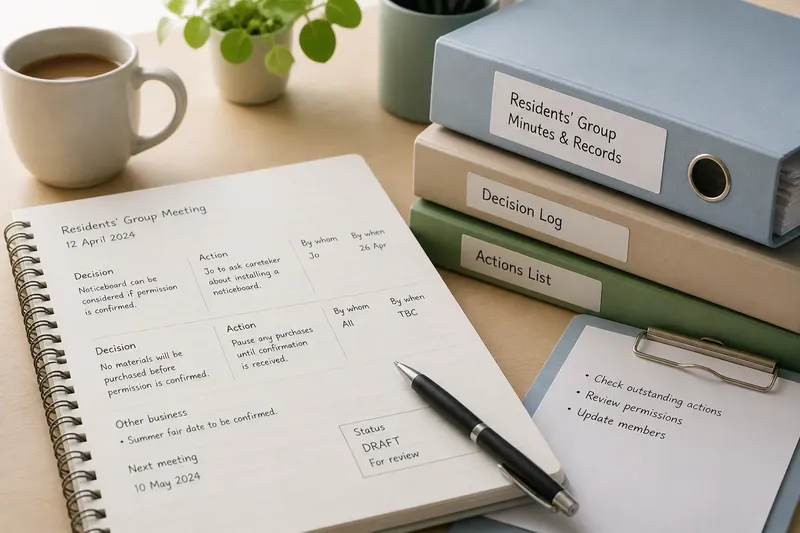
A process earns trust through its ordinary use, not through formal language alone. At the end of a decision, the chair can restate the outcome, identify any conditions and invite members to correct misunderstandings. A short record can capture the decision, the method used, the responsible person and the next review point. It need not reproduce every contribution; its purpose is to make the agreement usable.
Follow-up should match the decision. A delegated team may report back with its choice and reasons. A trial may need a review of how well the arrangement serves the people affected. A settled rule may simply require a named person to put it into practice. When the group checks progress, it should also say whether the original decision remains in force or needs another decision.
For a group seeking a clear decision process, the practical test is straightforward: can a participant explain what is being proposed, how discussion will lead to a decision, who has authority and what follows? If not, pause and clarify the route before asking people to commit. That small act makes the group’s authority easier to understand—and gives members a fairer basis for trusting its decisions.